

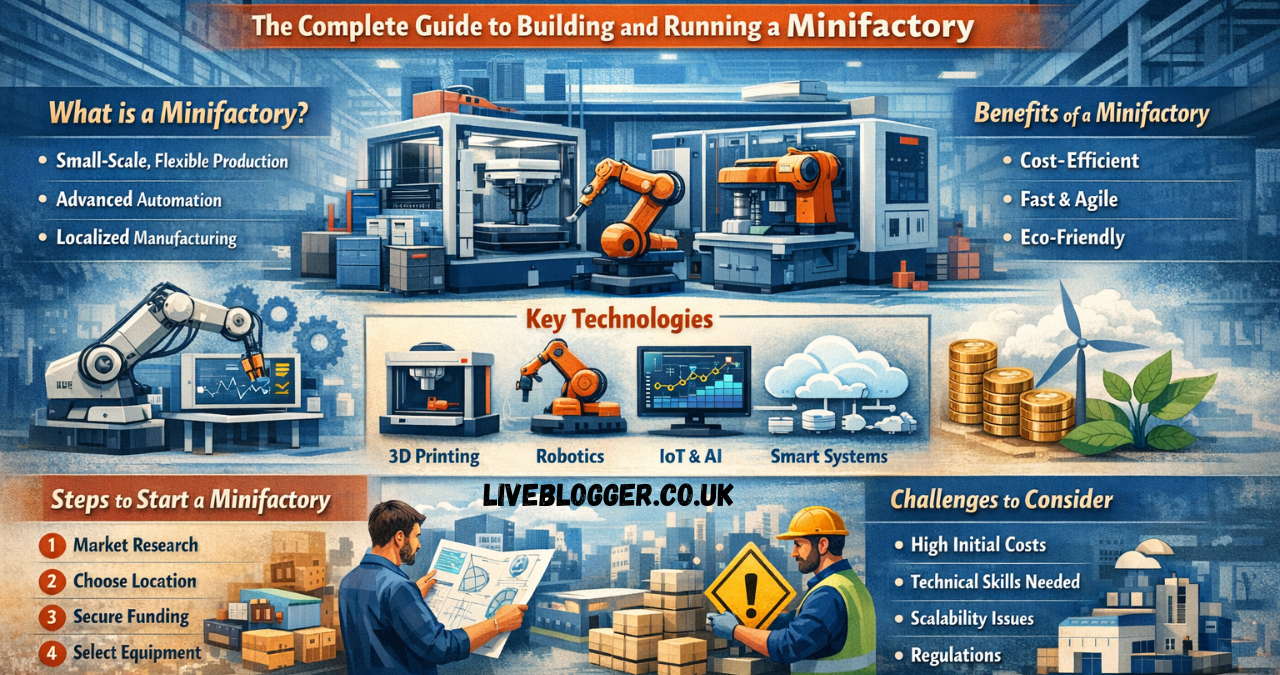
Understanding the Minifactory Concept
A minifactory is a compact, highly efficient manufacturing unit designed to produce goods on a smaller scale while maintaining high levels of automation, flexibility, and quality control. Unlike traditional large-scale factories that rely on mass production and centralized supply chains, a minifactory focuses on localized production, modular systems, and lean operations. This modern manufacturing model leverages advanced technologies such as automation, digital monitoring, and smart production workflows to deliver cost-effective and customized products. The rise of Industry 4.0 has significantly accelerated the adoption of minifactories, allowing businesses to integrate robotics, data analytics, and cloud-based management systems into smaller facilities. As global markets shift toward personalization and faster turnaround times, the minifactory model has emerged as a practical solution for startups, entrepreneurs, and even established enterprises looking to decentralize production.
The growing relevance of the minifactory is closely tied to global supply chain disruptions and changing consumer expectations. Businesses are increasingly seeking resilient production models that reduce dependency on overseas manufacturing and long transportation routes. A minifactory enables companies to produce goods closer to their customers, reducing shipping costs, minimizing environmental impact, and improving delivery speed. Moreover, the modular design of a minifactory allows for scalability without the massive capital expenditure associated with traditional plants. Whether producing electronics, textiles, automotive components, or consumer goods, minifactories provide a strategic advantage in a competitive and rapidly evolving marketplace. This shift represents not just a technological advancement but a fundamental transformation in how products are designed, manufactured, and delivered.
Core Components of a Successful Minifactory
At the heart of every successful minifactory lies a carefully planned physical infrastructure. Unlike sprawling industrial complexes, a minifactory typically operates within a compact facility optimized for workflow efficiency and space utilization. The layout often follows a modular design, where production units can be rearranged or expanded as needed. This flexibility supports rapid product iteration and evolving market demands. Advanced machinery such as CNC machines, 3D printers, and automated assembly systems form the backbone of production. These machines are frequently connected through IoT-enabled sensors that monitor performance, energy consumption, and output quality in real time. By integrating smart devices into the production line, operators gain immediate insights into operational efficiency and potential maintenance issues, reducing downtime and improving productivity.
Equally important to hardware is the digital ecosystem that supports a minifactory. Manufacturing Execution Systems (MES) and Enterprise Resource Planning (ERP) platforms streamline operations by coordinating inventory management, production scheduling, and quality control. Cloud computing enhances collaboration by enabling remote monitoring and data access from anywhere in the world. Artificial intelligence and predictive analytics further optimize performance by identifying inefficiencies and suggesting improvements. However, technology alone does not guarantee success. A skilled and adaptable workforce is essential. Employees in a minifactory environment are often cross-trained to handle multiple tasks, from machine operation to data analysis. This combination of digital infrastructure and human expertise creates a dynamic manufacturing environment capable of delivering precision, customization, and operational excellence.
Technologies Powering Modern Minifactories
Advanced technology is the driving force behind the efficiency and competitiveness of a minifactory. Additive manufacturing, commonly known as 3D printing, plays a transformative role by enabling rapid prototyping and on-demand production. Instead of relying on expensive molds or large production runs, manufacturers can create customized components quickly and cost-effectively. Robotics and collaborative robots, or cobots, enhance productivity by performing repetitive tasks with high precision while safely working alongside human operators. Automation reduces human error, improves consistency, and increases overall throughput. These technological advancements make it possible for minifactories to compete with larger facilities while maintaining a significantly smaller footprint.
Beyond machinery, data-driven technologies amplify the potential of a minifactory. The Internet of Things connects equipment to centralized monitoring systems, providing real-time insights into machine performance and environmental conditions. Predictive maintenance algorithms analyze data to anticipate equipment failures before they occur, minimizing costly downtime. Artificial intelligence enhances quality assurance by detecting defects through machine vision systems and automated inspections. Data analytics tools evaluate production metrics to optimize workflows and resource allocation. Together, these technologies create a smart manufacturing ecosystem where decisions are informed by accurate, real-time information. This technological integration not only improves efficiency but also empowers businesses to innovate rapidly, respond to market changes, and maintain high standards of quality.
Benefits and Challenges of Operating a Minifactory

Operating a minifactory offers numerous strategic advantages, particularly in terms of cost efficiency and flexibility. Initial investment requirements are generally lower than those of traditional manufacturing plants, making the model accessible to startups and small to medium-sized enterprises. Reduced facility size translates to lower utility costs, while localized production minimizes transportation expenses. Furthermore, the ability to produce small batches allows companies to test new products without committing to large-scale manufacturing runs. This agility significantly reduces financial risk and enhances responsiveness to consumer trends. Faster time-to-market is another major benefit, as streamlined workflows and automated systems accelerate production cycles and product launches.
Despite its advantages, the minifactory model also presents certain challenges. The integration of advanced technologies requires specialized technical expertise, which may necessitate additional training or recruitment. Initial equipment costs, particularly for robotics and digital systems, can still be substantial. Scalability can also pose limitations if demand exceeds production capacity. Additionally, regulatory compliance and quality assurance standards must be maintained regardless of factory size. Addressing these challenges requires careful planning, continuous improvement, and a long-term strategic vision. By balancing innovation with practical operational management, businesses can overcome these obstacles and unlock the full potential of a minifactory.
How to Start and Scale a Minifactory
Launching a minifactory begins with comprehensive market research and a well-defined business plan. Identifying a niche market or specialized product offering is crucial for differentiation. Entrepreneurs must evaluate demand, competition, and potential profit margins before investing in infrastructure and equipment. Selecting the right location is equally important. Proximity to customers, suppliers, and transportation networks can significantly impact operational efficiency. Urban minifactories, for example, benefit from access to local markets and skilled labor pools. Securing funding through private investors, government grants, or small business loans ensures sufficient capital to acquire advanced machinery and digital systems.
Scaling a minifactory requires strategic reinvestment and technological upgrades. As demand grows, modular production units can be added to increase capacity without disrupting existing operations. Continuous staff training ensures that employees remain proficient in emerging technologies and evolving production techniques. Establishing partnerships with suppliers and distributors further strengthens supply chain resilience. Additionally, integrating sustainability practices such as energy-efficient systems and waste reduction strategies enhances long-term viability. By combining strategic planning, technological innovation, and operational discipline, businesses can transform a modest manufacturing unit into a scalable and highly competitive enterprise.
Conclusion
The minifactory represents a paradigm shift in modern manufacturing, offering a flexible, technology-driven alternative to traditional large-scale production facilities. By leveraging automation, data analytics, and modular infrastructure, businesses can produce high-quality goods efficiently and sustainably. The localized nature of minifactories enhances supply chain resilience, reduces environmental impact, and enables faster response to consumer demands. As markets continue to prioritize customization and speed, the appeal of compact and agile production systems will only grow stronger.
While challenges such as technological investment and workforce training must be carefully managed, the long-term benefits of adopting the minifactory model are substantial. From cost savings and operational agility to innovation and sustainability, minifactories provide a forward-thinking solution for entrepreneurs and established manufacturers alike. As Industry 4.0 technologies continue to evolve, the future of manufacturing will likely be defined not by massive centralized plants, but by smart, connected, and highly adaptable minifactories operating close to the communities they serve.
Frequently Asked Questions (FAQs)
1. What industries are best suited for a minifactory?
Industries such as electronics, automotive parts, textiles, food processing, and customized consumer goods benefit significantly from the minifactory model.
2. How much investment is required to start a minifactory?
Costs vary depending on equipment and technology integration, but a minifactory generally requires significantly less capital than a traditional factory.
3. Can a minifactory scale over time?
Yes, modular infrastructure and digital systems make it easier to expand production capacity as demand increases.
4. Is a minifactory environmentally friendly?
Minifactories often reduce waste, energy consumption, and transportation emissions, making them more sustainable than traditional manufacturing facilities.
5. Do minifactories require highly skilled workers?
While advanced technology is involved, cross-training and targeted skill development can prepare employees for efficient operation.