

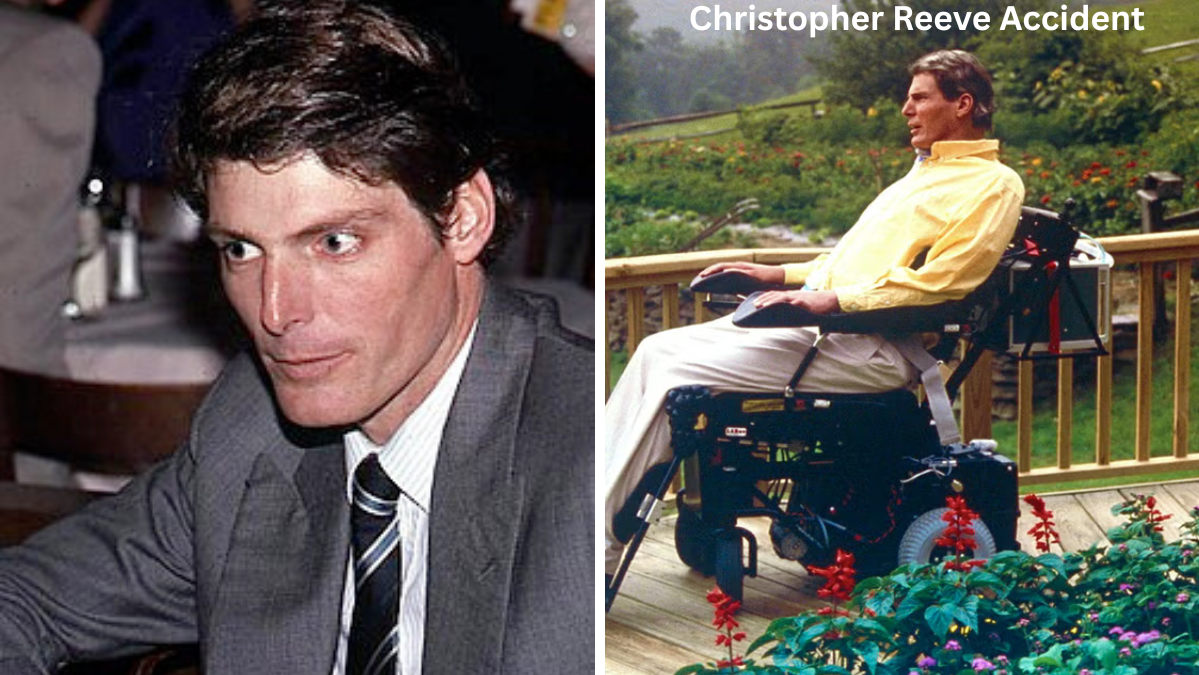
When people think of Superman, they often imagine strength, courage, and the ability to overcome impossible odds. For an entire generation, actor Christopher Reeve embodied those qualities both on and off the screen. While he became world-famous for portraying Superman, it was a devastating real-life event that transformed him into an even greater symbol of resilience.
The christopher reeve accident remains one of the most discussed incidents in Hollywood history. What began as a routine equestrian competition in 1995 became a life-altering tragedy that changed the course of Reeve’s future forever. Yet instead of allowing the accident to define him through loss, he turned it into a platform for hope, medical advancement, and disability advocacy.
His story continues to inspire people around the world because it demonstrates how determination can exist even in the face of overwhelming adversity. The accident did not take away his ability to influence society. In many ways, it expanded it.
Christopher Reeve Before the Tragedy
Before his life changed dramatically, Christopher Reeve was already an accomplished actor with an impressive career. Born on September 25, 1952, in New York City, he displayed an interest in acting from an early age. His talent, charisma, and dedication quickly set him apart from many of his peers.
Although he appeared in numerous theatrical productions and films, his breakthrough came when he was cast as Superman in the 1978 blockbuster film. His portrayal was widely praised because he brought both strength and humanity to the iconic superhero. Audiences believed he could be both the powerful Superman and the humble Clark Kent.
Over the following years, Reeve appeared in several Superman films and established himself as one of Hollywood’s most recognizable actors. Beyond acting, he was known for his intelligence, athleticism, and adventurous spirit. He enjoyed sailing, skiing, flying, and horseback riding. Few could have imagined that one of these passions would eventually lead to a life-changing event.
His active lifestyle reflected his personality. He embraced challenges and constantly pushed himself to learn new skills. This determination would later become one of the defining characteristics of his recovery journey.
The Day Everything Changed
On May 27, 1995, Christopher Reeve participated in an equestrian competition in Culpeper, Virginia. Horse riding had become one of his favorite activities, and he was deeply committed to improving his skills in the sport.
During the event, Reeve was riding his horse in a jumping competition. As the horse approached a jump, something unexpected occurred. The horse suddenly stopped before the obstacle, causing Reeve to be thrown forward.
The fall itself lasted only seconds, but its consequences would last a lifetime. Reeve landed headfirst, suffering a severe injury to his cervical spine. The impact fractured two vertebrae in his neck and caused catastrophic damage to his spinal cord.
Emergency medical personnel quickly arrived on the scene. Reeve was airlifted to a nearby hospital, where doctors worked urgently to save his life. For a period of time, his condition was extremely critical.
The christopher reeve accident immediately became international news. Fans across the globe were shocked that the actor who had portrayed one of the strongest fictional heroes had experienced such a devastating injury. https://vsnews.co.uk/ https://upbuzz.co.uk/
Understanding the Severity of the Injury
Spinal cord injuries are among the most serious medical conditions a person can experience. The spinal cord acts as the body’s communication network, transmitting signals between the brain and the rest of the body.
When Reeve suffered damage to his cervical spinal cord, those communication pathways were disrupted. As a result, he became paralyzed from the neck down, a condition known as quadriplegia.
The severity of the injury meant that he lost movement and sensation in most of his body. He also became dependent on a ventilator to assist with breathing.
The following table highlights the key details of the injury and its immediate consequences.
| Aspect | Details |
|---|---|
| Date of Injury | May 27, 1995 |
| Location | Culpeper, Virginia |
| Activity | Equestrian jumping competition |
| Injury Type | Cervical spinal cord injury |
| Physical Impact | Paralysis from the neck down |
| Medical Condition | Quadriplegia |
| Respiratory Support | Ventilator assistance required |
| Long-Term Effect | Permanent mobility impairment |
Medical experts at the time explained that the injury was among the most severe forms of spinal trauma. Survival itself was uncertain during the initial days following the accident.
The road ahead would be extraordinarily difficult, requiring extensive surgeries, rehabilitation, and emotional adjustment.
The Immediate Emotional Impact
The physical injuries were only one aspect of the challenge. The emotional and psychological impact was equally profound.
Christopher Reeve later spoke openly about the despair he experienced during the early days after the accident. The sudden loss of independence forced him to confront a reality he had never imagined.
He had spent his life being active, adventurous, and physically capable. Now he faced the possibility of permanent paralysis.
One of the most frequently cited moments from his recovery involved a conversation with his wife, Dana Reeve. During a period of deep uncertainty, she reassured him with words that became famous:
“You’re still you, and I love you.”
These words provided emotional strength during one of the darkest periods of his life. They reminded him that his identity extended far beyond physical ability.
Family support played a critical role in helping him find the determination to continue fighting.
Medical Treatment and Surgeries
Following the accident, Reeve underwent complex surgery to stabilize his spine. Surgeons inserted metal plates and screws to support the damaged vertebrae.
The operation was only the beginning of a long medical journey. Recovery required intensive rehabilitation and ongoing treatment.
Medical professionals worked closely with him to maintain physical health and prevent complications commonly associated with spinal cord injuries. These complications can include infections, muscle deterioration, respiratory issues, and circulation problems.
Rehabilitation involved countless hours of therapy. Although complete recovery remained uncertain, Reeve approached treatment with remarkable dedication.
Doctors and therapists noted his willingness to push through difficult exercises and explore every possible avenue for improvement.
His determination reflected the same discipline that had helped him succeed as an actor and athlete.
Public Reaction Around the World
The public response to the christopher reeve accident was overwhelming. Millions of people followed updates about his condition through newspapers, television broadcasts, and magazines.
Fans sent letters, cards, and messages of encouragement from every corner of the globe. Many people felt a personal connection to Reeve because of his portrayal of Superman.
The irony was impossible to ignore. A man known for playing an invincible hero now faced one of the most difficult battles imaginable.
Yet public admiration increased rather than diminished. People saw courage not in physical strength but in his willingness to confront adversity openly.
Media coverage frequently highlighted his positive attitude, determination, and commitment to recovery.
Over time, Reeve became a symbol of resilience for individuals facing serious injuries and disabilities.
Redefining Heroism
Before the accident, many people associated Christopher Reeve with fictional heroism. Afterward, perceptions changed dramatically.
His real-life actions demonstrated a different kind of courage. Instead of battling villains on screen, he faced pain, uncertainty, and physical limitations every day.
This transformation reshaped public understanding of heroism.
True courage often appears in ordinary moments: attending therapy sessions, maintaining hope, supporting loved ones, and refusing to give up despite overwhelming challenges.
Reeve became an example of these qualities.
Many disability advocates pointed out that his story helped challenge stereotypes surrounding paralysis and spinal cord injuries. He showed that individuals with disabilities could continue making meaningful contributions to society.
His life after the accident became a powerful lesson in perseverance.
The Birth of a New Mission
As time passed, Reeve shifted his focus toward advocacy and medical research.
Rather than withdrawing from public life, he became increasingly active in promoting awareness about spinal cord injuries.
He recognized that scientific research offered hope not only for himself but also for millions of others living with paralysis.
This realization gave him a new purpose.
The christopher reeve accident had introduced him to a community facing significant challenges. He became determined to use his platform to improve their lives.
Through speeches, interviews, and public appearances, he encouraged governments, researchers, and healthcare organizations to invest in medical innovation.
His advocacy efforts brought unprecedented attention to spinal cord injury research.
The Christopher & Dana Reeve Foundation
One of Reeve’s most significant contributions was his work with what would become the Christopher & Dana Reeve Foundation.
The organization focused on improving quality of life for people living with paralysis while also supporting research aimed at finding treatments and cures.
The foundation became a leading voice in the field of spinal cord injury awareness.
Its mission extended beyond scientific research. It also emphasized practical support, education, community programs, and resources for individuals and families affected by paralysis.
By leveraging his celebrity status, Reeve helped attract funding and public attention that might otherwise have been difficult to secure.
His efforts continue to benefit countless people today.
Advances in Research Inspired by His Advocacy
One of Reeve’s greatest achievements was raising awareness about the potential of scientific research.
He consistently argued that breakthroughs would require investment, collaboration, and public support.
Researchers working in neurology, regenerative medicine, and rehabilitation often acknowledged the positive impact of his advocacy.
Funding increased in many areas related to spinal cord injury studies. Public interest also expanded as more people became aware of the challenges faced by individuals with paralysis.
Although a complete cure remains elusive, significant progress has been made in understanding spinal cord function, nerve regeneration, and assistive technologies.
Many experts believe that Reeve’s influence accelerated conversations about these important medical topics.
Returning to Work and Public Life
Despite severe physical limitations, Christopher Reeve continued to work after the accident.
He directed films, appeared in television projects, and remained active in public discussions.
His return to professional life demonstrated that disability does not eliminate creativity, intelligence, or leadership.
Audiences admired his refusal to disappear from public view.
Every appearance served as a reminder that life can remain meaningful even after profound physical loss.
His willingness to remain visible also helped normalize conversations about disability representation in media.
By continuing his career, he challenged assumptions about what individuals with paralysis could accomplish.
Personal Growth Through Adversity
Many people who followed Reeve’s journey noticed changes in his perspective over time.
Before the accident, success was often measured through career achievements and physical accomplishments.
Afterward, he frequently spoke about deeper values such as relationships, purpose, compassion, and resilience.
The experience broadened his understanding of human strength.
He learned to appreciate small victories that many people take for granted.
Simple improvements in health, moments with family, and opportunities to help others became increasingly meaningful.
This personal evolution resonated with audiences because it reflected universal human experiences.
People facing their own challenges often found inspiration in his outlook.
Dana Reeve’s Extraordinary Support
Any discussion of Christopher Reeve’s journey must acknowledge the remarkable role played by Dana Reeve.
Throughout the years following the injury, she served as caregiver, advocate, partner, and source of emotional strength.
Her dedication became an essential part of his recovery and advocacy efforts.
Dana frequently appeared alongside Christopher at events and public engagements. Together, they advocated for research funding and disability awareness.
Their relationship became a powerful example of commitment during difficult circumstances.
Many observers viewed their partnership as one of the most inspiring aspects of the story.
The support she provided helped enable many of Reeve’s accomplishments after the accident.
The Broader Impact on Disability Awareness
The christopher reeve accident brought unprecedented visibility to issues affecting people with disabilities.
For many members of the public, it was the first time they seriously considered the realities of living with paralysis.
Media coverage highlighted accessibility challenges, healthcare needs, caregiver responsibilities, and rehabilitation efforts.
These discussions contributed to broader awareness and understanding.
Advocates noted that increased visibility often leads to meaningful social change.
When society becomes more informed, support for accessibility initiatives and medical research tends to grow.
Reeve’s influence extended far beyond his personal circumstances.
His story helped create conversations that continue today.
Memorable Quotes That Defined His Philosophy
Christopher Reeve became known for powerful statements about perseverance and hope.
One of his most famous quotes remains:
“A hero is an ordinary individual who finds the strength to persevere and endure in spite of overwhelming obstacles.”
This quote reflects the philosophy that guided much of his life after the injury.
Another memorable statement was:
“Once you choose hope, anything’s possible.”
These words continue to inspire people facing adversity around the world.
They illustrate how Reeve transformed personal tragedy into a message of encouragement and resilience.
The Final Years
In the years following the accident, Reeve remained deeply involved in advocacy, public speaking, and research initiatives.
He continued pushing for advancements in spinal cord injury treatment while maintaining an active public presence.
Although he faced numerous medical challenges, he refused to abandon his mission.
His dedication earned widespread respect from medical professionals, researchers, disability advocates, and ordinary citizens.
By the early 2000s, he had become one of the most influential voices in disability advocacy worldwide.
His efforts demonstrated extraordinary commitment to improving the lives of others.
Even while managing his own health struggles, he remained focused on creating positive change.
Christopher Reeve’s Passing and Legacy
Christopher Reeve passed away on October 10, 2004, at the age of 52.
His death prompted tributes from around the world.
Political leaders, actors, athletes, researchers, and fans praised his courage and determination.
Many obituaries emphasized that his greatest accomplishments occurred after his injury.
While Superman made him famous, his advocacy work made him inspirational.
The legacy of the christopher reeve accident extends far beyond the event itself. It became the catalyst for a movement that encouraged research, awareness, and support for individuals living with paralysis.
Today, his influence remains visible through ongoing medical advancements and charitable initiatives.
His story continues to inspire new generations.
Why His Story Still Matters Today
More than two decades after the accident, Christopher Reeve’s journey remains relevant.
People continue to face life-changing injuries, illnesses, and personal setbacks. His example offers valuable lessons about resilience and purpose.
The challenges he confronted were extraordinary, but the principles he demonstrated are universal.
Hope, determination, courage, and compassion remain essential human qualities.
His life reminds us that identity is not defined solely by physical capability.
It is shaped by character, values, and the willingness to help others.
The enduring power of his story lies in this message.
He showed that even when circumstances change dramatically, it is still possible to create meaningful impact.
Conclusion
The christopher reeve accident stands as one of the most significant turning points in modern celebrity history. What began as a tragic horseback riding incident evolved into a remarkable story of courage, advocacy, and transformation.
Christopher Reeve lost much of his physical mobility, yet he gained a new mission that touched millions of lives. Through determination, public advocacy, and support for scientific research, he became a symbol of hope for people around the world.
His journey demonstrated that true strength is not measured by physical power but by the ability to persevere through adversity. While many remember him as Superman, his greatest legacy may be the example he set after tragedy struck.
His story continues to inspire because it reveals the extraordinary potential of the human spirit when faced with seemingly impossible challenges.
FAQ
What happened during the Christopher Reeve accident?
The accident occurred on May 27, 1995, during an equestrian jumping competition in Virginia. Christopher Reeve was thrown from his horse after it stopped unexpectedly before a jump. He landed headfirst and suffered a severe spinal cord injury that resulted in paralysis from the neck down.
How serious was Christopher Reeve’s spinal injury?
His injury was extremely severe. Damage to the cervical spinal cord caused quadriplegia, meaning he lost movement and sensation in most of his body. He also required ventilator support to assist with breathing.
Did Christopher Reeve ever walk again after the accident?
Christopher Reeve did not regain the ability to walk independently. However, through extensive rehabilitation and therapy, he experienced some improvements in movement and sensation that encouraged ongoing research into spinal cord recovery.
How did the Christopher Reeve accident affect medical research?
The christopher reeve accident significantly increased public awareness of spinal cord injuries. Reeve became a leading advocate for research funding, helping attract attention and resources to studies focused on paralysis treatment and rehabilitation.
What organization is associated with Christopher Reeve’s legacy?
The Christopher & Dana Reeve Foundation is the organization most closely associated with his legacy. It supports spinal cord injury research, paralysis resources, advocacy programs, and quality-of-life initiatives for individuals living with disabilities.
Why is Christopher Reeve considered an inspiration?
People admire Christopher Reeve because he transformed a devastating personal tragedy into a mission to help others. His determination, optimism, advocacy work, and commitment to scientific progress made him a symbol of resilience and hope worldwide.
Read also: Henry Cavill Young: The Remarkable Journey From Schoolboy Dreamer to Global Superstar