

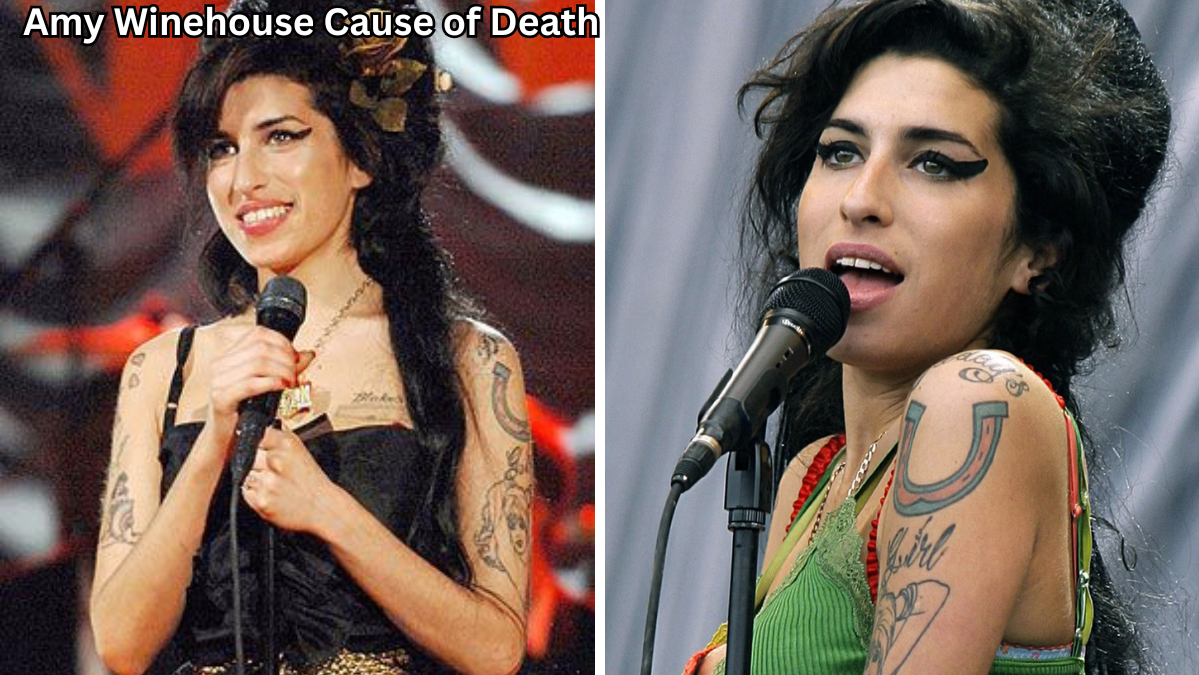
The story of Amy Winehouse is one of extraordinary talent, worldwide fame, artistic brilliance, and heartbreaking struggle. More than a decade after her passing, people around the world continue searching for information about the amy winehouse cause of death, hoping to understand what happened to one of the most gifted singers of her generation.
Amy Winehouse was not simply another successful musician. She possessed a voice that sounded timeless, blending jazz, soul, rhythm and blues, and contemporary music into something uniquely her own. Her songs carried raw emotion, honesty, and vulnerability that resonated with millions of listeners. Albums such as Frank and Back to Black transformed her into an international superstar and earned her widespread critical acclaim.
Despite her success, Amy’s personal life often became the focus of public attention. Media coverage frequently highlighted her struggles with substance abuse, relationships, and mental health challenges. As her fame grew, so did the pressure surrounding her life. This intense scrutiny created a complex narrative that often overshadowed her artistic achievements.
When Amy Winehouse died on July 23, 2011, the news shocked fans, fellow musicians, and the entertainment industry. She was only 27 years old, joining a group of legendary artists who died at the same age. The circumstances surrounding her death generated enormous public interest, widespread speculation, and ongoing discussions about addiction, recovery, celebrity culture, and mental health.
Understanding her passing requires looking beyond headlines and examining the facts, the medical findings, and the broader context of her life. Doing so helps paint a more accurate picture of the woman behind the music and the challenges she faced.
Amy Winehouse’s Rise to Global Stardom
Before exploring the circumstances of her death, it is important to understand who Amy Winehouse was and why her loss had such a profound impact.
Born on September 14, 1983, in London, England, Amy Jade Winehouse grew up in a family that appreciated music. Influenced by jazz legends and classic vocalists, she developed a deep passion for singing at an early age. Her distinctive voice quickly set her apart from her peers.
Her debut album, Frank, released in 2003, received significant praise from critics. The record showcased her songwriting abilities, mature lyrical themes, and impressive vocal range. While successful, it was only a glimpse of what was to come.
Everything changed with the release of Back to Black in 2006. The album became a global phenomenon. Songs like “Rehab,” “Back to Black,” and “You Know I’m No Good” captured audiences worldwide. The album’s retro sound combined with deeply personal lyrics created a masterpiece that remains influential today.
Amy won multiple Grammy Awards and became one of the most recognizable voices in modern music. Yet even during the height of her success, signs of personal struggle were increasingly visible.
Her fame brought extraordinary opportunities, but it also exposed her vulnerabilities to public view. Every setback became a headline. Every challenge became a topic of discussion. This constant attention contributed to an environment that was difficult for anyone to navigate.
A Timeline of Key Events Before Her Death
The years leading up to Amy Winehouse’s passing were marked by periods of both recovery and relapse. Understanding these events provides important context.
| Year | Event |
|---|---|
| 2003 | Release of debut album Frank |
| 2006 | Release of Back to Black |
| 2007 | International fame and Grammy recognition |
| 2008 | Public concerns about substance abuse intensify |
| 2009 | Attempts at recovery and rehabilitation |
| 2010 | Reports suggest improvements in her health |
| 2011 | Final public performances and tragic death |
Throughout these years, Amy’s relationship with alcohol and drugs became a recurring topic in media coverage. However, her situation was often more complicated than the simplified narratives presented in tabloids.
Friends, family members, and colleagues frequently described periods when she appeared healthier and committed to recovery. These moments highlighted her determination to overcome her difficulties.
At the same time, addiction is rarely a straightforward journey. Recovery often involves setbacks, progress, and ongoing challenges. Amy’s experience reflected that reality.
Her final months contained both hopeful signs and ongoing concerns. Many people close to her believed she was trying to rebuild stability in her life.
The Official Findings Regarding Amy Winehouse Cause of Death
The official determination of the amy winehouse cause of death came after a thorough investigation by authorities and medical professionals.
Amy Winehouse was found dead at her home in Camden, London, on July 23, 2011. Following her death, toxicology reports and coroner investigations were conducted to establish exactly what had happened.
The findings revealed that alcohol poisoning was responsible for her death. According to the investigation, Amy consumed a large quantity of alcohol after a period of abstinence. This sudden return to heavy drinking had catastrophic consequences.
Medical evidence indicated that her blood alcohol concentration was significantly above the legal driving limit in the United Kingdom. Experts concluded that the level was high enough to impair essential bodily functions.
The investigation found no evidence that illegal drugs played a direct role in her death. This detail surprised many observers because public discussion had frequently focused on her history with drugs.
Instead, the medical conclusion pointed specifically to acute alcohol intoxication. The evidence showed that alcohol alone was sufficient to explain her death.
The official findings brought clarity to a situation surrounded by rumors and speculation. They also highlighted the serious risks associated with alcohol dependency and relapse.
Understanding Alcohol Poisoning
To fully understand the circumstances surrounding Amy’s death, it is helpful to understand alcohol poisoning itself.
Alcohol poisoning occurs when a person consumes a dangerous amount of alcohol in a short period. The body’s ability to process alcohol becomes overwhelmed, causing toxic effects that can impact vital organs and essential bodily functions.
As blood alcohol levels rise, breathing may slow, heart rate can become irregular, body temperature may decrease, and consciousness can be impaired. In severe cases, the condition becomes life-threatening.
One particularly important factor is tolerance. People who drink heavily over long periods often develop a higher tolerance to alcohol. When they stop drinking for an extended period, that tolerance can decrease significantly.
If they later consume amounts similar to what they once tolerated, their bodies may no longer be able to handle it safely. Medical professionals have noted that this phenomenon can dramatically increase the risk of alcohol poisoning.
This context became a significant aspect of discussions surrounding Amy’s death. Reports suggested she had reduced or stopped drinking before returning to alcohol consumption shortly before her passing.
The tragic outcome illustrates how dangerous alcohol dependency can be, even when someone appears to be making progress toward recovery.
The Coroner’s Investigation and Medical Evidence
The investigation into Amy Winehouse’s death received significant public attention because of her celebrity status.
Coroners examined toxicology results, witness statements, medical records, and other evidence to determine the circumstances surrounding her death. Their goal was to establish facts rather than rely on assumptions or media narratives.
The evidence indicated that Amy had consumed a substantial amount of alcohol. Medical experts explained that the alcohol concentration in her bloodstream was potentially fatal.
Importantly, the investigation did not conclude that foul play was involved. Nor did it identify other substances as primary contributors.
These findings helped answer many questions that emerged immediately after her death. While rumors circulated widely in the media, the official investigation provided a fact-based explanation supported by scientific evidence.
The case also sparked broader discussions about addiction treatment, relapse prevention, and public awareness regarding alcohol-related risks.
Many health professionals used the tragedy as an opportunity to educate the public about the dangers associated with excessive alcohol consumption.
The Challenges Amy Faced Throughout Her Life
Amy Winehouse’s story cannot be reduced to a single event or medical finding. Her life involved numerous personal challenges that shaped her experiences.
She struggled with intense public scrutiny for much of her adult life. Photographers followed her daily activities. Tabloids documented her appearance, relationships, and personal difficulties.
This constant attention created immense pressure. Many observers believe the environment surrounding celebrity culture contributed to the stress she experienced.
Amy also faced relationship difficulties that frequently became public knowledge. Personal conflicts often generated headlines, increasing the emotional burden she carried.
In addition, she dealt with addiction-related challenges that affected multiple aspects of her life. Recovery efforts can be difficult under any circumstances. Managing them while being watched by millions of people adds another layer of complexity.
Several individuals close to Amy later emphasized her warmth, humor, intelligence, and generosity—qualities that were often overlooked amid sensational media coverage.
Remembering these aspects of her personality helps create a fuller understanding of who she was beyond the headlines.
Public Reaction to Her Death
The world reacted with shock when news of Amy Winehouse’s death became public.
Fans gathered outside her home to leave flowers, messages, photographs, and tributes. Social media platforms were filled with expressions of grief from people across the globe.
Musicians, actors, and public figures shared memories of Amy’s talent and influence. Many described her as one of the most important voices of her generation.
The loss felt particularly devastating because she was still young and widely viewed as capable of producing many more years of remarkable music.
Media outlets around the world covered the story extensively. While some reporting focused on her struggles, others highlighted her artistic accomplishments and cultural impact.
The response demonstrated how deeply Amy’s music had connected with listeners. Her songs spoke to themes of love, heartbreak, vulnerability, and resilience, making her work feel intensely personal to many fans.
Her death also reignited conversations about how society treats individuals facing addiction and mental health challenges.
The 27 Club Connection
Following her death, Amy Winehouse became associated with what is commonly known as the “27 Club.”
This term refers to a group of influential musicians and artists who died at the age of 27. Among the most frequently cited members are Jimi Hendrix, Janis Joplin, Jim Morrison, and Kurt Cobain.
The connection generated widespread media attention because of the apparent pattern. However, researchers generally caution against viewing the phenomenon as evidence of a meaningful statistical trend.
Instead, experts emphasize that each individual’s circumstances were unique and should be understood on their own terms.
Amy’s death became part of this cultural narrative, but focusing solely on the 27 Club can distract from the specific realities of her life and experiences.
Her story deserves to be understood as an individual journey rather than simply another chapter in a broader myth.
How the Media Covered Amy Winehouse
Media coverage played a significant role in shaping public perceptions of Amy Winehouse during her lifetime.
Some reporting celebrated her extraordinary talent and musical achievements. Critics frequently praised her songwriting, vocal ability, and artistic authenticity.
At the same time, many publications devoted considerable attention to her personal struggles. Photographs documenting difficult moments became common features in tabloids and entertainment news.
This imbalance often frustrated those who felt her artistry was being overshadowed by sensationalism.
In retrospect, numerous journalists and commentators have reflected on how Amy was portrayed. Some have argued that media coverage lacked empathy and contributed to a culture that prioritized spectacle over understanding.
These discussions remain relevant today as society continues examining the responsibilities of media organizations when reporting on public figures facing personal challenges.
Amy’s experience serves as an important case study in the relationship between celebrity, privacy, and public consumption.
Addiction, Recovery, and Relapse
One reason the amy winehouse cause of death continues attracting attention is that it highlights broader issues related to addiction and recovery.
Addiction is a complex medical condition influenced by biological, psychological, social, and environmental factors. Recovery is rarely linear.
Many individuals experience periods of improvement followed by setbacks. Relapse does not necessarily indicate failure; rather, it often reflects the ongoing nature of the recovery process.
Health professionals emphasize the importance of long-term support systems, medical care, counseling, and community resources. Recovery typically involves sustained effort over time.
Amy’s story underscores how vulnerable individuals can be during transitions between abstinence and renewed substance use. These periods may carry heightened risks that are not always widely understood.
Her death increased public awareness about these dangers and encouraged more open conversations regarding addiction treatment.
The tragedy also reminded many people that substance-related disorders can affect individuals regardless of fame, wealth, or success.
Amy Winehouse’s Musical Legacy
Although discussions about her death continue, Amy Winehouse’s lasting legacy is rooted in her music.
Her songs remain influential among artists across multiple genres. Musicians frequently cite her as an inspiration because of her authenticity and emotional honesty.
Back to Black is widely regarded as one of the most important albums of the twenty-first century. Its influence can be heard in contemporary soul, pop, jazz, and R&B music.
Amy’s songwriting stood out because she transformed personal experiences into universally relatable stories. Her lyrics felt intimate without losing their broader appeal.
She also helped revive interest in retro-inspired soul music. Her success opened doors for numerous artists who followed.
Even years after her death, new generations continue discovering her work. Streaming platforms, documentaries, and tributes have introduced her music to audiences who were too young to experience her rise to fame firsthand.
This enduring popularity reflects the timeless quality of her artistry.
Lessons Society Has Learned Since Her Passing
The conversations that followed Amy Winehouse’s death extended far beyond music.
Many people began discussing how addiction is portrayed in public discourse. Advocacy groups emphasized the need for compassion rather than judgment.
Mental health awareness also became a larger part of cultural conversations. Increasing numbers of organizations promoted education, support services, and stigma reduction efforts.
The entertainment industry examined its own practices regarding artist welfare and support systems. Questions emerged about how performers can be better protected from the pressures associated with fame.
Public attitudes toward celebrity struggles have evolved in some respects since 2011. While challenges remain, there is often greater recognition that public figures are human beings dealing with real difficulties.
Amy’s story contributed to these changing perspectives and encouraged more thoughtful discussions about health, recovery, and personal well-being.
Why Interest in Amy Winehouse Remains Strong
More than a decade later, people continue researching the amy winehouse cause of death and revisiting her life story.
Part of this interest stems from the enduring popularity of her music. Fans naturally want to understand the person behind the songs they love.
Another factor is the contrast between her remarkable talent and her tragic early death. Stories involving unrealized potential often leave a lasting emotional impact.
Amy also represented authenticity in an industry sometimes criticized for manufactured images. Many listeners felt she expressed genuine emotions without pretense.
Her music captured experiences that remain relatable today. Themes of love, heartbreak, vulnerability, and resilience continue resonating with audiences across generations.
As a result, public fascination with her life has never fully disappeared.
Her story remains relevant because it intersects with universal themes about creativity, struggle, fame, and humanity.
Remembering Amy Beyond the Headlines
Conversations about Amy Winehouse should not focus exclusively on tragedy.
Those who knew her frequently described a person with a sharp sense of humor, deep intelligence, and genuine kindness. Friends recalled her generosity and passion for music.
One often-cited sentiment about Amy is that her greatest gift was her honesty. Through her songs, she communicated emotions that many people struggle to express.
Music critics have repeatedly noted that her recordings continue feeling fresh and emotionally powerful years after their release. This ability to connect across time is a hallmark of truly significant artistry.
Her life contained moments of joy, creativity, success, and personal connection alongside its challenges. Recognizing this complexity provides a more balanced perspective.
Rather than defining her solely through the circumstances of her death, many fans prefer to celebrate the extraordinary work she left behind.
Her voice remains a lasting reminder of her talent and artistic vision.
Conclusion
The official amy winehouse cause of death was alcohol poisoning resulting from acute alcohol intoxication. Investigations concluded that a high level of alcohol in her system led to her tragic passing on July 23, 2011, at the age of 27.
While the medical explanation is clear, the broader story is far more complex. Amy Winehouse was an exceptional artist whose life included remarkable achievements as well as significant personal struggles. Her journey highlighted the challenges associated with addiction, recovery, fame, and public scrutiny.
Today, she is remembered not only for the circumstances surrounding her death but also for the extraordinary music she created. Her voice, songwriting, and artistic authenticity continue inspiring listeners around the world.
The legacy of Amy Winehouse endures because her work transcends time. Although her life ended far too soon, her influence on music and culture remains powerful, ensuring that her story and songs will continue resonating for generations to come.
FAQ
What was the official amy winehouse cause of death?
The official amy winehouse cause of death was alcohol poisoning. Coroner investigations concluded that she died from acute alcohol intoxication after consuming a large amount of alcohol, resulting in a fatal blood alcohol concentration.
How old was Amy Winehouse when she died?
Amy Winehouse was 27 years old when she passed away on July 23, 2011. Her age at death led to frequent comparisons with other famous musicians associated with the so-called 27 Club.
Were illegal drugs involved in Amy Winehouse’s death?
The official investigation found no evidence that illegal drugs directly contributed to her death. Toxicology findings indicated that alcohol poisoning was the primary cause.
Why did Amy Winehouse’s death receive so much attention?
Her death attracted worldwide attention because she was one of the most celebrated singers of her generation. Fans, musicians, and media organizations closely followed developments surrounding the amy winehouse cause of death due to her cultural significance.
What is Amy Winehouse’s most famous album?
Back to Black is widely considered her most famous and influential album. It includes iconic songs such as “Rehab,” “Back to Black,” and “You Know I’m No Good.”
What impact did Amy Winehouse have on music?
Amy Winehouse influenced countless artists through her distinctive voice, honest songwriting, and blend of jazz, soul, and R&B. Her music helped revive interest in retro-inspired soul sounds and continues inspiring musicians today.
Why is Amy Winehouse still remembered today?
Amy Winehouse remains remembered because of her extraordinary talent, timeless music, and emotional authenticity. While discussions about the amy winehouse cause of death continue, her artistic legacy remains the most enduring part of her story.
Read also : Lola Jade Fielder-Civil: A Detailed Look at Her Life, Family Background, and Public Interest