

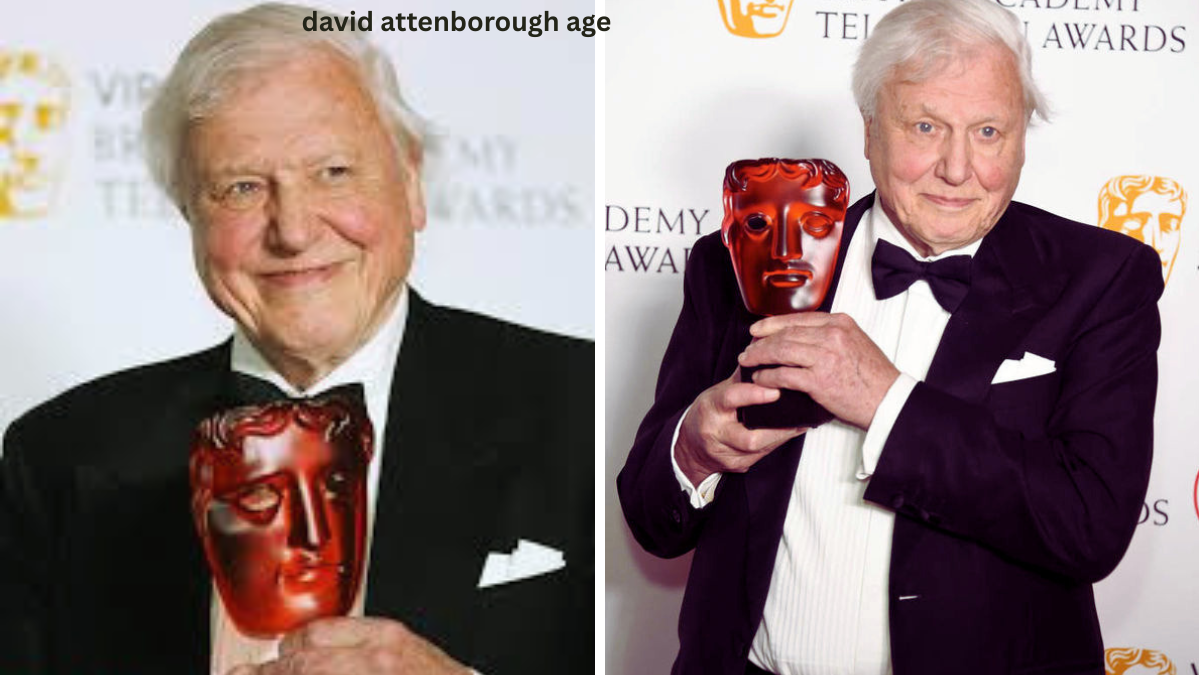
Few public figures in modern history have remained as respected, admired, and influential across generations as David Attenborough. From breathtaking wildlife documentaries to urgent warnings about climate change, his voice has become one of the most recognizable in the world. Whenever people search for “david attenborough age,” they are usually searching for more than a number. They want to understand how a man in his later years continues to inspire millions with such energy, wisdom, and passion.
The fascination surrounding his longevity is deeply connected to his remarkable career. For decades, he has traveled across jungles, oceans, deserts, and frozen landscapes, bringing the hidden wonders of nature into homes worldwide. Even as technology, television, and society transformed dramatically, his storytelling remained timeless. The topic of david attenborough age often sparks conversations about endurance, discipline, curiosity, and purpose.
What makes him especially unique is the way he bridges generations. Older audiences grew up watching his earliest broadcasts, while younger viewers discovered him through streaming platforms and viral environmental speeches. He has never relied on controversy or celebrity culture to stay relevant. Instead, he earned trust through consistency, intelligence, and a genuine love for the natural world.
His age has become symbolic in many ways. It reflects not only a long life but also a lifetime of observation. Few people alive today have witnessed environmental change on such a global scale while documenting it with extraordinary detail. As a result, discussions around his life naturally extend into conversations about conservation, climate awareness, biodiversity, and the future of Earth itself.
Early Life and the Foundations of a Remarkable Journey
Born on May 8, 1926, in Isleworth, England, David Attenborough grew up during a period of enormous global change. His childhood unfolded between the aftermath of World War I and the tensions leading toward World War II. From an early age, he showed an intense fascination with the natural world. He collected fossils, stones, insects, and natural specimens long before he became famous for exploring distant ecosystems.
His upbringing played a major role in shaping his worldview. He was raised in an intellectually stimulating environment where education and curiosity were encouraged. Nature was not merely a hobby for him; it became an obsession that guided much of his future. Even as a child, he displayed the careful observational skills that later defined his broadcasting style.
The discussion around david attenborough age becomes more meaningful when viewed against the historical events he lived through. He experienced black-and-white radio culture, the rise of television, the invention of satellite broadcasting, and the digital streaming revolution. Few personalities have adapted across so many eras while remaining culturally relevant.
His academic years further strengthened his scientific understanding. He studied Natural Sciences at the University of Cambridge, an experience that sharpened his analytical thinking and deepened his appreciation for biology and geology. Unlike many television presenters who simply read scripts, Attenborough built his reputation on genuine scientific knowledge combined with exceptional storytelling ability.
A Career That Changed Wildlife Broadcasting Forever
When David Attenborough joined the BBC, television itself was still evolving. Wildlife programming at the time was limited and technically difficult. Cameras were bulky, filming conditions were harsh, and many species had never been captured on film before. Yet Attenborough saw possibilities where others saw limitations.
One of his earliest breakthroughs came with the television series “Zoo Quest,” which introduced audiences to exotic animals and remote environments. Instead of treating wildlife as distant curiosities, he presented animals as complex living beings connected to fragile ecosystems. His calm narration style made viewers feel as though they were traveling beside him.
Over the years, his documentaries revolutionized nature filmmaking. Productions like Life on Earth, The Blue Planet, and Planet Earth changed audience expectations for documentary storytelling. Stunning cinematography, emotional depth, and scientific accuracy became the new standard.
The reason people remain amazed by david attenborough age is because he continued creating groundbreaking work well into his later decades. Most broadcasters retire long before reaching such milestones. Attenborough, however, remained actively involved in production, narration, and environmental advocacy even into his nineties.
His documentaries became more than entertainment. They evolved into educational experiences capable of shaping public understanding of ecosystems, endangered species, and climate change. Schools, universities, scientists, and environmental organizations frequently reference his work because of its global impact.
Understanding David Attenborough’s Age and Longevity
The interest in david attenborough age is often tied to his astonishing vitality. Born in 1926, he reached his late nineties while still maintaining a visible public presence. Audiences continue to be surprised by his sharp memory, articulate speech, and intellectual energy.
Longevity, however, is rarely explained by luck alone. Throughout interviews and public appearances, Attenborough has often reflected a disciplined lifestyle. He maintained professional dedication, intellectual curiosity, and continuous engagement with meaningful work. Many experts believe that having a sense of purpose contributes significantly to healthy aging, and Attenborough certainly embodies that principle.
The following table highlights key milestones in his life and career:
| Year | Age | Milestone |
|---|---|---|
| 1926 | 0 | Born in Isleworth, England |
| 1952 | 26 | Joined the BBC |
| 1954 | 28 | Hosted “Zoo Quest” |
| 1979 | 53 | Released “Life on Earth” |
| 2001 | 75 | Narrated “The Blue Planet” |
| 2006 | 80 | Released “Planet Earth” |
| 2020 | 94 | Published environmental documentary film “A Life on Our Planet” |
| 2026 | 100 | Celebrated a century of life and influence |
What makes this timeline remarkable is not just the length of his life but the consistency of his contribution. Many public figures fade from relevance over time, yet Attenborough remained influential across multiple generations.
His age also gives emotional weight to his environmental warnings. When he speaks about disappearing forests, melting glaciers, or endangered wildlife, audiences recognize that he has personally witnessed these changes over many decades. His observations are not theoretical; they come from firsthand experience accumulated across a lifetime of exploration.
The Voice That Became a Global Symbol of Nature
One of the most iconic aspects of David Attenborough’s legacy is his voice. Calm, intelligent, and deeply expressive, it transformed wildlife narration into an art form. His delivery style balanced scientific detail with emotional warmth, making complex ecological concepts accessible to ordinary viewers.
People searching for david attenborough age often rediscover old documentaries and become amazed by how little his voice changed over the decades. Even in later years, his narration retained clarity and emotional resonance. That consistency helped create a powerful sense of familiarity for audiences worldwide.
His narration style differs dramatically from sensationalist media approaches. Rather than exaggerating danger or drama, he focused on observation and wonder. This approach encouraged viewers to appreciate nature instead of merely fearing or exploiting it.
Attenborough once famously said:
“No one will protect what they don’t care about; and no one will care about what they have never experienced.”
This quote captures the philosophy behind his work. He understood that emotional connection is essential for conservation. By helping people fall in love with the natural world, he inspired environmental awareness on a massive scale.
His voice also became associated with trust. In an era filled with misinformation and media sensationalism, audiences viewed him as reliable, thoughtful, and sincere. That trust significantly amplified the influence of his environmental messages.
Environmental Advocacy in Later Years
As the conversation around climate change intensified, David Attenborough transformed from a wildlife presenter into one of the world’s most respected environmental advocates. His documentaries increasingly focused on habitat destruction, pollution, species extinction, and global warming.
The topic of david attenborough age became especially significant during this phase because many viewers saw an elderly man dedicating his remaining years to warning humanity about environmental collapse. His urgency carried emotional power precisely because it came from someone who had observed Earth’s transformation over nearly a century.
In documentaries such as David Attenborough: A Life on Our Planet, he described himself as a witness to environmental decline. Rather than speaking abstractly, he connected scientific evidence with personal memories gathered from decades of travel.
Another powerful quote from Attenborough reflects this mission:
“The truth is: the natural world is changing. And we are totally dependent on that world.”
This message resonated globally because it avoided political hostility while emphasizing shared responsibility. He consistently framed environmental protection as essential for humanity’s survival rather than merely an ideological debate.
Despite his advanced age, he continued appearing at international climate conferences, collaborating with scientists, and producing documentaries aimed at younger generations. His persistence demonstrated that advocacy does not expire with age.
Why Younger Generations Admire Him
One of the most fascinating aspects of David Attenborough’s popularity is his strong connection with younger audiences. Many elderly public figures struggle to remain culturally relevant, yet Attenborough became increasingly admired among teenagers and young adults.
Part of this appeal comes from authenticity. Younger viewers are highly sensitive to insincerity and corporate messaging. Attenborough’s calm, thoughtful approach feels genuine because it is grounded in decades of lived experience.
The growing interest in david attenborough age among younger generations reflects admiration rather than simple curiosity. Many see him as a symbol of wisdom, patience, and lifelong learning. In an age dominated by short attention spans and viral trends, his documentaries encourage slow observation and deep reflection.
Social media also contributed to his renewed popularity. Clips from his documentaries frequently circulate online, often accompanied by emotional reactions to wildlife scenes or environmental warnings. His speeches about conservation have become widely quoted across digital platforms.
Another reason for his appeal is his optimism. Although he openly discusses environmental crises, he avoids hopelessness. Instead, he emphasizes humanity’s ability to change direction through science, cooperation, and sustainable choices.
The Physical Demands Behind His Career
People often underestimate the physical demands of wildlife filmmaking. Long before modern travel conveniences became widespread, Attenborough spent years visiting remote and difficult environments. Dense rainforests, freezing polar regions, underwater ecosystems, and arid deserts became part of his professional life.
Considering david attenborough age, many audiences are amazed by the sheer endurance required for such work. Filming wildlife documentaries often involves extreme weather, unpredictable animal behavior, limited infrastructure, and exhausting schedules.
In earlier decades, filming equipment was enormous compared to today’s lightweight digital technology. Crews transported heavy cameras across rugged landscapes while dealing with limited communication systems and difficult transportation conditions.
Attenborough’s commitment to firsthand observation distinguished him from many presenters who remained in studios. He immersed himself in the environments he documented, creating a stronger emotional connection with audiences.
Although he eventually reduced physically demanding travel due to age, his involvement in documentary production continued. Advances in technology allowed him to narrate and guide projects even when he was no longer trekking through jungles personally.
How His Work Influenced Conservation Movements
The influence of David Attenborough extends far beyond television entertainment. His documentaries significantly shaped public attitudes toward conservation and biodiversity. For millions of viewers, his work served as their first meaningful exposure to environmental science.
When discussions about david attenborough age arise, they often connect to the idea of legacy. His greatest legacy may not simply be filmmaking but the environmental consciousness he inspired worldwide.
Wildlife organizations, educational institutions, and environmental activists frequently credit Attenborough’s documentaries for motivating public engagement. Many scientists and conservationists have stated that his programs inspired their career choices during childhood.
His impact can be seen in growing awareness around issues such as ocean pollution, coral reef destruction, deforestation, and endangered species protection. By visually documenting environmental damage, he transformed distant scientific problems into emotionally understandable realities.
Importantly, he achieved this influence without aggressive rhetoric. His approach relied on evidence, storytelling, and empathy rather than outrage. That balance allowed him to connect with audiences across political and cultural boundaries.
A Personal Style Rooted in Humility
Despite global fame, David Attenborough has consistently maintained a humble public image. He rarely centered documentaries around himself. Instead, he allowed animals, landscapes, and scientific discoveries to remain the focus.
This humility partly explains why interest in david attenborough age feels respectful rather than invasive. Audiences view him less as a celebrity and more as a trusted educator who dedicated his life to public understanding.
He also avoided many aspects of celebrity culture. While other public figures pursued controversy or publicity, Attenborough remained committed to educational storytelling. His reputation grew through substance rather than spectacle.
Colleagues often describe him as deeply professional, intellectually curious, and remarkably prepared. Even after decades in broadcasting, he reportedly approached projects with enthusiasm and careful research.
His humility made his environmental warnings even more effective. Because he avoided exaggeration, audiences took his concerns seriously when he spoke urgently about climate change and habitat destruction.
The Emotional Power of His Documentaries
One reason David Attenborough’s work continues resonating globally is the emotional depth within his documentaries. He understood that facts alone rarely inspire change. Emotion, wonder, and storytelling create lasting impact.
The ongoing interest in david attenborough age reflects emotional attachment developed across generations of viewers. Families watched his documentaries together for decades, creating shared memories tied to his narration.
His programs captured extraordinary moments in nature: migrating whales, hunting predators, glowing deep-sea creatures, and delicate bird courtship rituals. These scenes created emotional connections between audiences and ecosystems they might never visit personally.
At the same time, he did not avoid difficult realities. His documentaries increasingly showed environmental destruction, dying coral reefs, shrinking ice caps, and endangered species. This combination of beauty and vulnerability made his message deeply compelling.
Another memorable quote captures his philosophy perfectly:
“An understanding of the natural world is a source of not only great curiosity, but great fulfillment.”
This idea lies at the heart of his storytelling. Nature was never presented merely as scenery. It was presented as essential to human meaning, identity, and survival.
Media Evolution Across His Lifetime
The history of modern media can almost be traced through David Attenborough’s career. He began during the era of black-and-white television and remained active during the rise of streaming services and ultra-high-definition filming.
This extraordinary timeline adds another layer to discussions about david attenborough age. Very few broadcasters successfully adapted across so many technological revolutions while maintaining cultural influence.
Early wildlife documentaries relied on limited filming capabilities. Today, drones, underwater robotics, satellite imaging, and high-speed cameras allow filmmakers to capture scenes once considered impossible. Attenborough embraced these innovations while preserving strong storytelling fundamentals.
His willingness to evolve helped keep his documentaries relevant. Younger audiences accustomed to visually sophisticated content still find his productions engaging because they combine cutting-edge cinematography with meaningful narration.
At the same time, his presence provided continuity across decades of media transformation. In a rapidly changing world, his voice remained reassuringly familiar.
Public Recognition and Global Honors
David Attenborough’s contributions earned him countless awards and honors from universities, governments, environmental organizations, and broadcasting institutions worldwide. He received knighthood and numerous honorary degrees recognizing both his educational impact and environmental advocacy.
The fascination surrounding david attenborough age often increases during milestone birthdays because global audiences celebrate him not merely as a broadcaster but as a cultural institution.
He became one of the rare public figures admired across political, national, and generational divides. Scientists respect his accuracy, educators value his accessibility, and audiences appreciate his warmth and sincerity.
Many species have even been named after him, reflecting the scientific community’s admiration. Such recognition highlights how deeply his influence extends into environmental research and conservation culture.
Importantly, he never allowed recognition to overshadow his mission. Even after receiving prestigious honors, he continued focusing on wildlife education and ecological awareness rather than personal celebrity.
The Relationship Between Aging and Purpose
The subject of david attenborough age naturally invites broader reflection on aging itself. His life challenges stereotypes suggesting that old age automatically means decline, irrelevance, or disengagement from society.
Instead, Attenborough demonstrates how intellectual passion and purpose can remain vibrant throughout life. His later decades became some of his most influential years, particularly regarding environmental advocacy.
Psychologists often emphasize the importance of meaningful engagement for healthy aging. Attenborough’s career reflects this principle strongly. He remained mentally active, socially connected, and professionally involved far beyond typical retirement age.
His example also reshaped public perceptions of elderly individuals in media. Rather than presenting aging as limitation alone, he embodied experience, wisdom, and credibility.
This perspective resonated especially strongly in cultures increasingly focused on youth. Attenborough reminded audiences that aging can deepen insight rather than diminish value.
The Lasting Impact of His Environmental Message
As environmental concerns intensify globally, David Attenborough’s work continues gaining relevance. Many issues he discussed decades ago are now central topics in international politics, education, and scientific research.
The topic of david attenborough age has therefore become linked to urgency. Audiences recognize that he spent nearly a century observing Earth’s transformation, making his warnings especially powerful.
His documentaries consistently emphasized interconnectedness. Oceans, forests, insects, climate systems, and human societies were presented not as isolated subjects but as parts of a shared planetary system.
Unlike many public debates dominated by anger, Attenborough’s communication style encouraged thoughtful reflection. He appealed to both reason and emotion, making environmental protection feel personally meaningful rather than abstract.
Even viewers who rarely engage with science often connect with his documentaries because they focus on storytelling and visual experience. This broad accessibility helped expand environmental awareness far beyond academic circles.
Conclusion
The global fascination with david attenborough age reflects something deeper than curiosity about a birth date. It represents admiration for a life devoted to knowledge, exploration, education, and environmental stewardship. Across nearly a century, David Attenborough witnessed dramatic transformations in technology, media, society, and the natural world itself.
His influence reaches far beyond documentary filmmaking. He helped millions appreciate wildlife, understand ecosystems, and recognize humanity’s responsibility toward the planet. Through calm narration, scientific integrity, and emotional storytelling, he transformed nature broadcasting into one of the most impactful forms of modern education.
What makes his legacy truly extraordinary is the consistency of his purpose. Even in advanced age, he remained committed to informing audiences and encouraging environmental action. His life demonstrates that curiosity, discipline, and compassion can remain powerful forces throughout every stage of human existence.
For many people, David Attenborough is not simply a television presenter. He is a symbol of wisdom, patience, and lifelong dedication to understanding the world. As future generations continue discovering his documentaries, his voice and message will likely endure for decades to come.
FAQ
How old is David Attenborough?
David Attenborough was born on May 8, 1926. By 2026, he reached the remarkable milestone of 100 years old. The widespread interest in david attenborough age reflects admiration for his continued influence and energy even in later life.
Why is David Attenborough so famous?
David Attenborough became famous for creating and narrating groundbreaking wildlife documentaries. His work with the BBC introduced millions of viewers to ecosystems, animals, and environmental science in a visually stunning and emotionally engaging way.
What are David Attenborough’s most famous documentaries?
Some of his most celebrated productions include Planet Earth, The Blue Planet, Life on Earth, and David Attenborough: A Life on Our Planet. These documentaries revolutionized wildlife filmmaking and inspired global environmental awareness.
Why do people search for david attenborough age so often?
Many people search for david attenborough age because they are amazed by his longevity, mental sharpness, and continued professional activity. His ability to remain active and influential across decades makes him an inspiring public figure.
What is David Attenborough’s role in environmental activism?
In recent decades, David Attenborough became one of the world’s most respected voices on climate change and conservation. His documentaries and public speeches highlight biodiversity loss, pollution, deforestation, and the urgent need for sustainable living.
Did David Attenborough travel extensively for his documentaries?
Yes, throughout his career he traveled across nearly every continent to film wildlife and ecosystems. His firsthand experiences in jungles, deserts, oceans, and polar regions helped create some of the most iconic nature documentaries ever produced.
What makes David Attenborough’s narration style unique?
His narration combines scientific accuracy with emotional warmth and storytelling skill. Rather than using dramatic exaggeration, he focuses on observation, wonder, and respect for the natural world, which helped audiences connect deeply with his documentaries.