

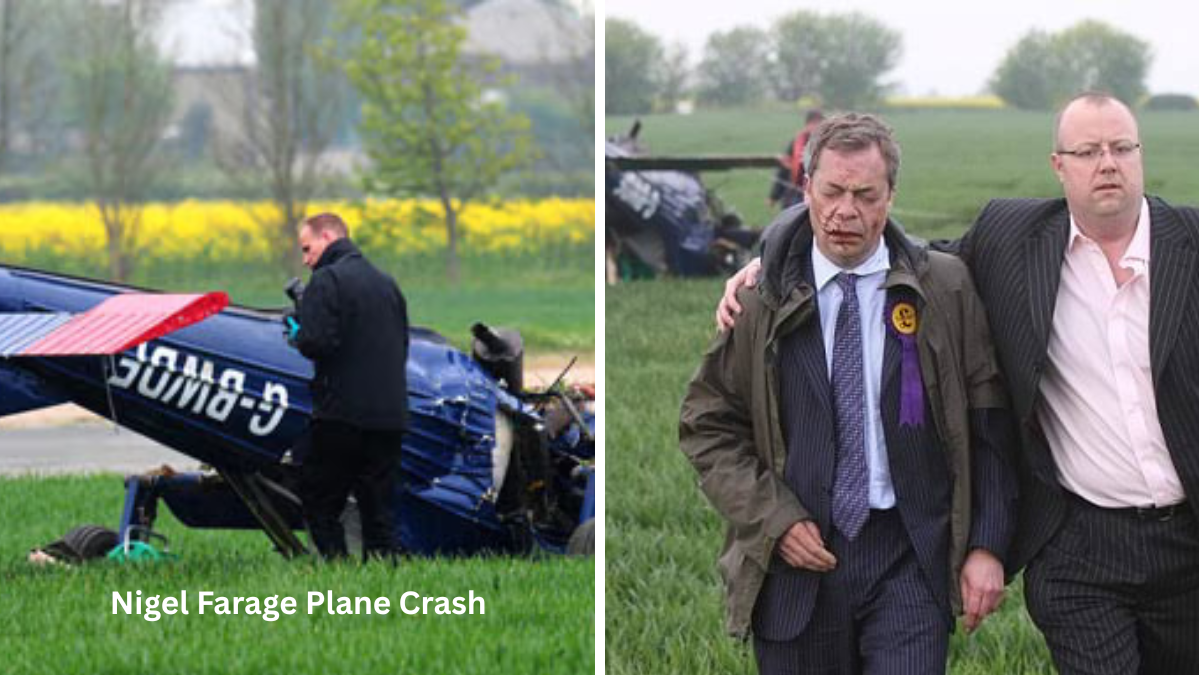
The story of the Nigel Farage plane crash remains one of the most extraordinary incidents in modern British political history. Long before Brexit transformed the political landscape of the United Kingdom, Nigel Farage was already a prominent and controversial figure. Known for his outspoken views, energetic campaigning style, and ability to dominate headlines, he built a reputation as one of the most recognizable politicians in the country.
Yet among the many moments that shaped his public image, few were as dramatic as the aviation accident that almost cost him his life. The incident shocked supporters and critics alike, generating intense media attention and raising serious questions about safety, risk, and political campaigning.
For many people, the crash became more than just a news story. It represented a rare moment when politics, personal survival, and public fascination intersected. Images from the accident scene circulated widely, and discussions about what happened continued for years afterward.
The event also contributed to the mythology surrounding Farage’s political career. Supporters viewed his survival as evidence of resilience and determination, while observers noted how the accident became another chapter in the story of a politician who often found himself at the center of major national debates.
Understanding the circumstances of the accident requires looking beyond the headlines. The crash occurred during a period of intense political activity, and the consequences extended far beyond the immediate injuries and physical damage. It became part of a broader narrative about risk, leadership, media attention, and personal endurance.
The Political Climate Before the Aviation Accident
Before the incident occurred, Nigel Farage had already established himself as a significant force in British politics. As a leading figure in the UK Independence Party, he was dedicated to promoting British sovereignty and challenging the country’s relationship with the European Union.
At the time, political campaigns were increasingly relying on creative methods to attract public attention. Large events, media appearances, and symbolic displays were common tools used to gain visibility in a crowded political environment.
Farage was particularly skilled at generating publicity. His campaign strategies often included unconventional tactics designed to create memorable images and encourage discussion among voters. These methods helped him build a loyal following while also attracting criticism from opponents.
Political branding was becoming increasingly important, and visual messaging played a major role in campaign efforts. Against this backdrop, the circumstances that eventually led to the accident began to take shape. What was intended as a campaign-related activity would soon become an event remembered across the country.
The broader political atmosphere was highly competitive, and parties were searching for new ways to connect with the public. Aviation-based advertising and aerial banners had occasionally been used in promotional campaigns, offering a dramatic visual spectacle capable of attracting media coverage.
No one involved could have anticipated how quickly a routine operation would transform into a life-threatening emergency.
The Events Leading Up to the Flight
The day of the accident began much like many other campaign days. Activities were planned, schedules were organized, and preparations were made for promotional events intended to attract public attention.
Farage was involved in a flight connected to campaign publicity. The aircraft was towing a banner designed to promote political messaging. Such flights are generally considered specialized aviation operations requiring careful planning and adherence to safety procedures.
Weather conditions, equipment checks, and operational preparations are all critical components of banner-towing flights. Even under normal circumstances, this type of aviation activity involves complexities not present in ordinary flights.
Witnesses later recalled that the operation appeared routine at the outset. The aircraft took off as expected, and there was little indication that anything unusual was about to occur.
However, aviation accidents often develop rapidly. A seemingly minor problem can escalate within seconds, leaving little time for corrective action. In this case, the situation deteriorated shortly after takeoff, creating a dangerous emergency that would have serious consequences.
The transition from routine campaign activity to life-threatening crisis happened so quickly that many observers initially struggled to understand what had occurred.
How the Accident Unfolded in the Air
The Nigel Farage plane crash occurred shortly after the aircraft became airborne. Reports indicated that complications arose involving the banner-towing equipment, creating an emergency situation.
In aviation, banner towing requires precise coordination between the aircraft and the equipment attached behind it. Any malfunction can affect aircraft performance and stability. Investigations later focused heavily on the mechanics of the operation and the sequence of events that led to the crash.
As the emergency developed, the pilot faced an extremely challenging situation. Aircraft emergencies often demand split-second decisions, particularly when altitude is limited and available options are restricted.
Eyewitnesses described seeing the aircraft experiencing difficulties before descending rapidly. What began as a routine promotional flight quickly turned into a catastrophic event.
The aircraft ultimately crashed, causing significant damage and resulting in serious injuries to those on board. Emergency responders were called to the scene immediately, and efforts to rescue the occupants began without delay.
The dramatic nature of the incident ensured that it would become national news almost instantly.
Immediate Response and Rescue Efforts
Emergency services responded quickly after the crash. Firefighters, medical personnel, and other first responders arrived at the scene to assess the situation and provide urgent assistance.
Aviation accidents often require coordinated emergency operations because of potential hazards including fuel leaks, fire risks, and structural damage. Responders worked under challenging conditions to ensure the safety of everyone involved.
Farage sustained serious injuries but survived. Medical teams transported him for treatment while investigators began securing the crash site.
The rapid response likely played a significant role in minimizing the consequences of the accident. Emergency personnel are trained extensively for such situations, and their actions during the critical first moments can make a substantial difference in outcomes.
News of the crash spread quickly through television broadcasts, newspapers, radio reports, and online media platforms. Political figures from across the spectrum expressed concern and wished those involved a full recovery.
The accident immediately became one of the most discussed stories in the country.
Injuries Sustained and the Recovery Process
One of the most remarkable aspects of the incident was Farage’s survival. The injuries he sustained were serious enough to require extensive medical attention and a lengthy recovery period.
Reports following the crash indicated that he suffered significant physical trauma. Recovery from aviation accidents can be physically demanding and emotionally challenging, particularly when injuries involve long-term rehabilitation.
Medical professionals worked to stabilize his condition and oversee his recovery. Supporters closely followed updates regarding his health, while media organizations provided continuous coverage of developments.
Recovering from a major accident often extends beyond physical healing. Survivors may face psychological challenges, including anxiety, stress, and the emotional impact of having experienced a near-fatal event.
Farage later discussed aspects of his recovery publicly, emphasizing both the seriousness of the accident and his determination to return to political activity.
His eventual return to public life reinforced an image of resilience that many supporters admired.
Key Facts About the Incident
| Aspect | Details |
|---|---|
| Type of Flight | Political promotional banner-towing flight |
| Location | England |
| Nature of Accident | Aircraft crash shortly after takeoff |
| Main Cause Investigated | Banner-towing equipment issues |
| Injuries | Serious but non-fatal |
| Emergency Response | Immediate rescue and medical treatment |
| Political Impact | Significant media attention and public discussion |
| Long-Term Legacy | Frequently referenced event in Farage’s career |
The table highlights the core facts most commonly associated with the accident and its aftermath.
Investigation Findings and Safety Questions
Following any serious aviation accident, investigators work to determine precisely what happened and why. The investigation into this crash examined technical factors, operational procedures, equipment performance, and regulatory compliance.
Aviation investigations are designed not only to identify causes but also to improve future safety. Lessons learned from accidents often influence procedures, training requirements, and operational standards.
Investigators reviewed witness statements, equipment conditions, flight records, and maintenance information. Their goal was to reconstruct the sequence of events as accurately as possible.
One commonly cited principle in aviation safety states:
“Every accident has a chain of events behind it.”
This observation reflects the reality that accidents rarely result from a single factor. Instead, they often involve a combination of circumstances that align in unexpected ways.
The findings generated discussions about banner-towing operations and the risks associated with specialized aviation activities.
Safety experts emphasized the importance of rigorous procedures and ongoing oversight to reduce the likelihood of similar incidents occurring in the future.
Media Coverage and Public Fascination
Media attention surrounding the crash was intense from the very beginning. News organizations recognized immediately that the story combined several elements likely to attract public interest: politics, aviation, personal survival, and dramatic visuals.
Television coverage featured footage from the crash scene, interviews with witnesses, and updates from medical authorities. Newspapers devoted significant space to analyzing the event and its implications.
The public fascination extended beyond traditional political audiences. Many people who had little interest in politics became interested in the story because of the dramatic circumstances involved.
Stories of survival often capture public imagination. The combination of a high-profile political figure and a serious aviation accident created a compelling narrative that remained in public discussion long after the immediate news cycle ended.
Media analysts later noted how the incident contributed to Farage’s public profile, making him even more recognizable across the country.
The event demonstrated how unexpected personal experiences can influence political narratives and public perceptions.
The Role of Resilience in Public Perception
Political careers often involve moments that define public perception. For Farage, surviving a serious aviation accident became one of those defining moments.
Many supporters viewed his recovery as evidence of determination and toughness. The ability to return to public life after a traumatic experience reinforced qualities that were already central to his political image.
Resilience is a characteristic frequently admired in public figures. When politicians overcome adversity, supporters often interpret those experiences as proof of leadership qualities and personal strength.
Farage’s return to campaigning after recovering from his injuries attracted significant attention. It signaled that the accident had not ended his political ambitions.
Observers noted that the experience seemed to strengthen rather than diminish his public profile. In some respects, the accident became part of the broader story that supporters associated with his career.
Whether viewed sympathetically or critically, the event ensured that his name remained firmly in the public consciousness.
Aviation Risks and the Realities of Specialized Flights
The crash also highlighted broader issues related to aviation safety. While commercial air travel remains extraordinarily safe, specialized aviation activities can involve unique risks.
Banner towing requires pilots to operate under conditions that differ significantly from ordinary recreational or commercial flights. Equipment configurations, flight dynamics, and operational demands create additional challenges.
Experts often emphasize that risk management is central to aviation. Pilots, maintenance crews, operators, and regulators all play essential roles in maintaining safety standards.
The accident served as a reminder that even well-planned operations can encounter unexpected complications. Aviation history contains numerous examples of incidents that occurred despite extensive preparation.
Safety improvements often emerge from careful analysis of accidents and near misses. By understanding what happened, the aviation community can implement measures designed to prevent similar events in the future.
This commitment to learning from experience remains one of the foundations of modern aviation safety culture.
Political Consequences and Long-Term Significance
Although the accident was primarily a personal and aviation-related event, it also had political implications. Public sympathy often follows serious accidents involving well-known figures, and Farage received widespread support during his recovery.
Political opponents largely set aside disagreements in the immediate aftermath, focusing instead on expressions of concern and goodwill. Such moments can temporarily transcend political divisions.
The incident also reinforced Farage’s reputation as a figure who repeatedly found himself at the center of major public conversations. Throughout his career, controversy, debate, and media attention frequently followed his activities.
Some analysts argued that surviving the crash contributed to his image as a persistent and determined campaigner. Others viewed the event simply as an unfortunate accident unrelated to political performance.
Regardless of interpretation, the accident became a permanent part of his public biography.
Years later, discussions about his career often continue to reference the crash as one of the most dramatic episodes in his life.
Why the Story Continues to Capture Attention
Many years after the event, interest in the story remains strong. Several factors explain why the accident continues to attract attention.
First, aviation accidents involving prominent public figures are relatively rare. The unusual circumstances naturally generate lasting curiosity.
Second, survival stories often remain compelling long after the events themselves. People are drawn to narratives involving adversity, recovery, and determination.
Third, Farage’s continued prominence in British politics has kept interest alive. As long as he remains a recognizable public figure, significant events from his past are likely to receive ongoing attention.
The accident also serves as a reminder of how quickly circumstances can change. A routine campaign activity became a life-threatening emergency within moments.
This unpredictability contributes to the enduring fascination surrounding the story.
The combination of politics, aviation, media attention, and personal resilience ensures that the incident remains one of the most memorable chapters in modern British political history.
The Lasting Legacy of the Accident
The legacy of the crash extends beyond the immediate injuries and media coverage. It occupies a unique place in the narrative of Farage’s public life.
For supporters, the incident symbolizes perseverance and survival. For aviation observers, it represents an important case study in operational safety and accident investigation.
For historians and political analysts, it offers insight into how unexpected events can shape public perception. Political careers are often influenced not only by policies and speeches but also by personal experiences that resonate with the public.
The accident demonstrates how a single moment can become deeply intertwined with a person’s public identity. Even years later, it remains one of the most frequently discussed episodes associated with Farage.
Its significance lies not merely in the fact that it occurred but in how it influenced conversations about politics, risk, media, and resilience.
The story continues to serve as a reminder of the fragile line between ordinary routine and extraordinary events.
Conclusion
The Nigel Farage plane crash remains one of the most remarkable incidents involving a modern British political figure. What began as a routine promotional flight quickly evolved into a serious aviation emergency that could easily have ended in tragedy. The accident drew widespread media attention, prompted detailed safety investigations, and became a defining moment in Farage’s public life.
Beyond the immediate drama, the event highlighted important issues related to aviation safety, emergency response, and personal resilience. Farage’s survival and recovery added a powerful human dimension to a story that might otherwise have been remembered only as a technical accident report.
Years later, the incident continues to attract public interest because it combines politics, risk, survival, and historical significance in a way few events can. Its place in British political history remains secure, serving as a reminder that unexpected moments often leave the deepest marks on public memory.
FAQ
What happened during the Nigel Farage plane crash?
The accident occurred during a promotional banner-towing flight in England. Shortly after takeoff, the aircraft encountered serious difficulties that led to a crash. Emergency responders quickly arrived at the scene, and Farage survived despite sustaining significant injuries.
Was Nigel Farage seriously injured in the crash?
Yes, he suffered serious injuries that required medical treatment and rehabilitation. Although the injuries were substantial, he ultimately recovered and returned to public life and political activity.
What caused the aircraft accident?
Investigations focused on issues connected to the banner-towing operation and associated equipment. Safety experts examined multiple factors to determine the sequence of events that led to the crash.
Why is the Nigel Farage plane crash still discussed today?
The incident remains notable because it involved a prominent political figure, dramatic circumstances, and a remarkable survival story. It continues to be referenced as one of the most memorable events in Farage’s career.
Did the accident affect Nigel Farage’s political career?
While the crash temporarily interrupted his activities, he eventually returned to politics. Many observers believe the experience contributed to his public image as a resilient and determined figure.
Were there broader aviation safety lessons from the crash?
Yes. The investigation highlighted the importance of operational safety, equipment reliability, and risk management in specialized aviation activities such as banner towing. The findings contributed to ongoing discussions about aviation safety standards.
How did the public react after the accident?
Public reaction included widespread concern, sympathy, and intense media interest. Supporters, political opponents, and members of the public followed updates on his condition and recovery closely.
Is the Nigel Farage plane crash considered a significant historical event?
Within the context of modern British political history, it is often regarded as a significant and memorable event because of its dramatic nature, extensive media coverage, and connection to a major political figure.
Read also: Kemi Badenoch Children: Family Life, Parenthood, and the Private Side of a Modern Political Leader