

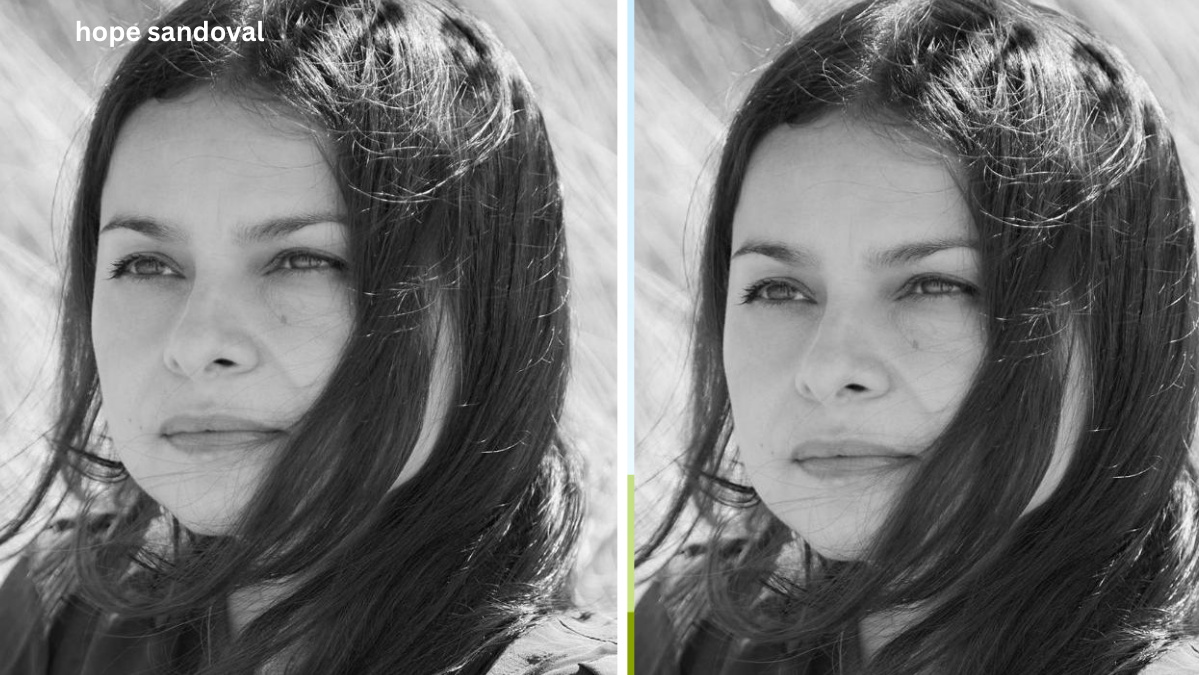
There are some artists whose music does more than simply fill silence—it reshapes it. Hope Sandoval belongs to that rare category. Her voice drifts rather than demands attention, yet it lingers in memory long after the last note fades. Known for her haunting presence and understated artistry, she has carved a unique space in alternative rock and dream pop that continues to influence generations.
From her early beginnings to her timeless work with Mazzy Star, Hope Sandoval has consistently defied conventional expectations of fame. She is not loud, not flashy, and certainly not eager for the spotlight. Instead, she lets the music speak—and somehow, it speaks volumes.
Meta description: Discover Hope Sandoval’s ethereal music, career journey, and lasting influence in dream pop and alternative rock.
The Early Life That Shaped a Quiet Icon
Hope Sandoval was born in Los Angeles, a city often associated with bright lights and loud ambition. Yet her upbringing reflected something far more introspective. Growing up in a Mexican-American household, she was exposed to a mix of cultural influences that subtly shaped her musical identity. Her connection to music didn’t come from a traditional route of formal training but from a deep, personal relationship with sound and emotion.
During her teenage years, she became captivated by underground music scenes and alternative sounds. Inspired by artists who valued authenticity over perfection, she began experimenting with her own voice. That voice—soft, distant, and almost whisper-like—would later become her signature.
Her early exposure to artists like The Velvet Underground and Nico helped define her aesthetic. These influences weren’t just audible in her music but visible in her artistic philosophy: less is more, and silence can be as powerful as sound.
The Rise of Mazzy Star and a Defining Sound
The real turning point in Hope Sandoval’s career came with the formation of Mazzy Star alongside guitarist David Roback. Together, they created a sound that felt almost otherworldly—a blend of psychedelic rock, folk, and ambient textures that resonated deeply with listeners.
Their breakthrough album, So Tonight That I Might See, introduced the world to “Fade Into You,” a song that would become synonymous with the band’s identity. It wasn’t just a hit—it was an experience. The track’s gentle guitar lines paired with Sandoval’s hypnotic vocals created an atmosphere that felt intimate yet expansive.
“Music should feel like it’s coming from somewhere you can’t quite reach,” Sandoval once reflected in an interview. That philosophy perfectly encapsulates the essence of Mazzy Star’s work.
Despite their success, Hope Sandoval remained famously reserved. Live performances often saw her standing in dim lighting, sometimes facing away from the audience. This wasn’t an act of rebellion but a reflection of her discomfort with fame. She preferred to let the music exist without distraction.
A Solo Journey Rooted in Authenticity
After Mazzy Star’s initial success, Hope Sandoval explored her own musical path with Hope Sandoval & the Warm Inventions. This project allowed her to expand her sound while maintaining the ethereal qualities that defined her earlier work.
Albums like Bavarian Fruit Bread showcased a more stripped-down, intimate approach. The instrumentation felt softer, the pacing slower, and the emotions even more raw. It was as if listeners were being invited into her inner world—a place where vulnerability and beauty coexist.
Her collaboration with artists such as Colm Ó Cíosóig of My Bloody Valentine further enriched her sound, blending dream pop textures with subtle experimental elements.
The Signature Sound of Hope Sandoval
Trying to describe Hope Sandoval’s music in conventional terms often feels limiting. Her sound isn’t just about genre—it’s about atmosphere. It exists somewhere between waking and dreaming, where emotions are felt more than understood.
Her vocals are intentionally restrained, almost fragile. Yet within that fragility lies immense strength. She doesn’t rely on vocal power or range; instead, she uses tone and emotion to create depth. Every note feels deliberate, every pause meaningful.
This approach aligns closely with the principles of dream pop, a genre that prioritizes texture and mood over structure. Alongside bands like Cocteau Twins, her work helped define and popularize this style.
A notable quote from a music critic captures it well: “Listening to her feels like remembering something you never actually experienced.”
Discography Overview
The following table highlights key releases associated with Hope Sandoval and her musical journey:
| Year | Album/Project | Notable Tracks | Contribution |
|---|---|---|---|
| 1990 | She Hangs Brightly (Mazzy Star) | Halah | Debut album establishing signature sound |
| 1993 | So Tonight That I Might See | Fade Into You | Breakthrough success |
| 1996 | Among My Swan | Flowers in December | Refined dream pop aesthetic |
| 2001 | Bavarian Fruit Bread | Suzanne | Solo artistic expression |
| 2009 | Through the Devil Softly | Blanchard | Continued evolution of sound |
| 2013 | Seasons of Your Day | California | Return of Mazzy Star |
This discography reflects not just productivity but intentional artistry. Hope Sandoval has never rushed releases, choosing instead to create when inspiration feels authentic.
Influence on Modern Music
The influence of Hope Sandoval extends far beyond her own discography. Many contemporary artists cite her as a major inspiration, particularly those working within indie, alternative, and ambient genres.
Her ability to create emotional resonance without overt expression has shaped how modern musicians approach songwriting. Artists today often aim for the same understated impact—music that whispers rather than shouts.
Bands and singers inspired by her work frequently incorporate soft vocals, layered instrumentation, and atmospheric production. This influence is evident in the rise of lo-fi aesthetics and minimalist arrangements in modern music.
The Mystery and Allure of Her Persona
Part of what makes Hope Sandoval so compelling is her enigmatic presence. In an era where artists often share every detail of their lives, she remains intentionally private. Interviews are rare, and public appearances even rarer.
This mystery isn’t a marketing strategy—it’s a natural extension of who she is. She values the separation between art and artist, allowing listeners to form their own interpretations without external influence.
Her reluctance to embrace fame has only added to her allure. Fans are drawn not just to her music but to the authenticity behind it. There’s a sense that what you hear is genuine, unfiltered emotion.
Collaborations That Expanded Her Reach
Over the years, Hope Sandoval has collaborated with a variety of artists, each partnership adding a new dimension to her sound. These collaborations often feel organic rather than strategic, driven by shared artistic sensibilities.
Working with The Chemical Brothers on tracks like “Asleep from Day” introduced her voice to electronic audiences. The contrast between her soft vocals and the duo’s dynamic production created a striking balance.
These collaborations demonstrate her versatility. While her core style remains consistent, she adapts effortlessly to different musical landscapes without losing her identity.
Cultural Impact and Legacy
The legacy of Hope Sandoval is not measured by chart positions or mainstream visibility. Instead, it’s reflected in the emotional connection her music creates. Her songs have become soundtracks to countless personal moments—quiet nights, introspective thoughts, and unspoken feelings.
Her work continues to resonate across generations, proving that authenticity transcends trends. In a fast-paced industry, her slow, deliberate approach stands as a reminder that art doesn’t need to be rushed to be relevant.
As one listener beautifully put it: “Her music doesn’t demand attention—it earns it.”
The Enduring Appeal of Timeless Music
There’s something undeniably timeless about Hope Sandoval’s work. It doesn’t feel tied to a specific era or trend. Instead, it exists in a space where emotions remain constant, regardless of time.
This timelessness is a testament to her artistic integrity. By staying true to her vision, she has created a body of work that continues to feel fresh and meaningful years after its release.
Her music invites listeners to slow down, to feel deeply, and to embrace the beauty of subtlety. In a world often driven by noise, that quiet power is more valuable than ever.
Conclusion
Hope Sandoval represents a rare kind of artistry—one that values emotion over spectacle and authenticity over visibility. Her journey through music has been defined not by ambition but by intention. Every note, every lyric, and every silence carries meaning.
Through her work with Mazzy Star and beyond, she has created a sound that feels both deeply personal and universally relatable. Her influence continues to shape modern music, reminding artists and listeners alike that sometimes, the softest voice can leave the strongest impact.
Her legacy is not just in the songs she has created but in the space she has opened for others to explore music in a more introspective, meaningful way.
FAQ
What genre is Hope Sandoval known for?
Hope Sandoval is primarily associated with dream pop and alternative rock. Her music blends atmospheric elements with soft vocals, creating a unique and immersive listening experience.
Why is Hope Sandoval considered influential?
Hope Sandoval is influential because of her distinctive vocal style and her role in shaping dream pop music. Many modern artists draw inspiration from her minimalist and emotionally rich approach.
What is her most famous song?
Her most famous song is “Fade Into You,” performed with Mazzy Star. It remains a defining track in alternative music history.
Does Hope Sandoval still make music?
Yes, Hope Sandoval continues to create music, often through her project Hope Sandoval & the Warm Inventions and occasional collaborations.
What makes Hope Sandoval’s voice unique?
Her voice is characterized by its softness, emotional depth, and subtle delivery. Rather than overpowering listeners, it gently draws them in, creating a deeply personal connection.